Acupressure with Ear Seeds: Why & How
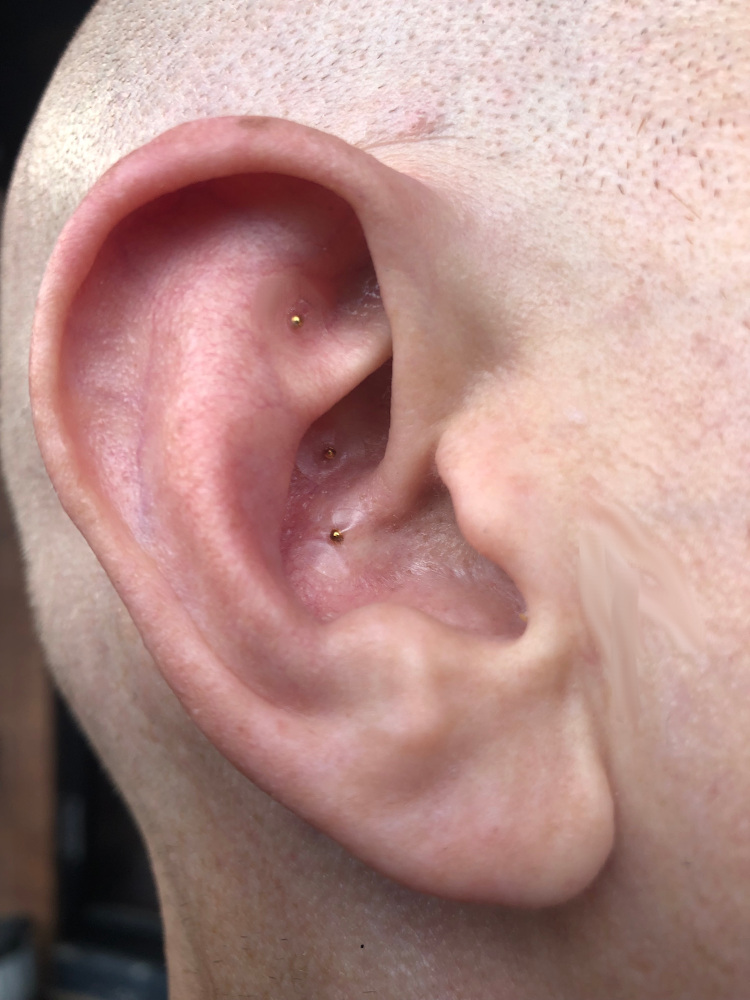
These inconspicuous acupressure tools extend the effects of an acupuncture treatment for a variety of conditions for up to a week! Sometimes referred to as ‘ear seeds’ because, historically, seeds from the Vaccaria plant were used. Now, most auricular acupressure tools are made with tiny gold or silver beads. The activation from the metal bead pressing into the chosen points will stimulate them (similar to how finger pressure can stimulate points on the body). Adding finger pressure on the beads will increase the local blood flow and neurological activity associated with the point. For instance, if used to promote sleep, you could massage the ear bead for a few minutes to calm your nervous system just before laying down in bed.
Why is the ear commonly treated with acupressure?
One facet is that the ear is one of the most accessible areas of the auricular branch of the vagus nerve. It has been postulated that the promising results of acupuncture for stress and depression or anxiety reduction may be partially explained by vagal nerve stimulation along with hypothalamic-pituitary-adrenal (HPA) axis activation [1]. In other words, auricular acupuncture is a great way to activate the ‘rest and digest’ functions of the nervous system.
Your acupuncturist can place these on specific points that support your treatment– research shows efficacy of specific auricular acupressure applications for several of the conditions I specialize in treating:
Pain Conditions:
Two of the most commonly treated conditions through acupuncture, chronic low back pain and osteoarthritis of the knee, also have been shown to be ameliorated by auricular acupressure [2, 3]. Generally speaking, auricular acupressure has been shown to increase the pain threshold [4], so this mechanism can explain its efficacy for pain conditions that have not yet been specifically studied or documented.
Digestive Conditions:
The scientific research on auricular acupressure includes studies showing efficacy for treating constipation [5], irritable bowel syndrome [6], and obesity [7]. It is well-known that there is a strong gut-brain connection and many digestive disorders are affected by stress and mood. As referenced above, auricular acupressure is a great way to coax activation of the ‘rest and digest’ functions.
Special Circumstances:
Additional special circumstances wherein auricular acupressure can be useful as evidenced in the scientific literature include cognitive performance, fatigue, postpartum recovery, and the side effects of chemotherapy. The above-referenced studies are a selection of conditions that I most commonly treat using auricular acupressure to augment my acupuncture treatments. If you are curious whether auricular acupressure might be a good fit for treating other symptoms, ask your healthcare provider.
How to Activate Ear Seeds:
Now that you know *why* you were given ear beads, gently rub the bead for a minute or so a few times a day or as directed by your healthcare provider. These beads are attached with waterproof tape so they will often stay in place for several days despite showering. If you notice any skin irritation from the adhesive tape after a few days, simply take them off and throw them away.
—
References:
[1] Liu, C.-H., Yang, M.-H., Zhang, G.-Z., Wang, X.-X., Li, B., Li, M., Woelfer, M., Walter, M., & Wang, L. (2020). Neural networks and the anti-inflammatory effect of transcutaneous auricular vagus nerve stimulation in depression. Journal of Neuroinflammation, 17(1), 54. https://doi.org/10.1186/s12974-020-01732-5
[2] Yang, L. H., Duan, P. B., Hou, Q. M., Du, S. Z., Sun, J. F., Mei, S. J., & Wang, X. Q. (2017). Efficacy of Auricular Acupressure for Chronic Low Back Pain: A Systematic Review and Meta-Analysis of Randomized Controlled Trials. Evidence-based complementary and alternative medicine : eCAM, 2017, 6383649.https://doi.org/10.1155/2017/6383649
[3] Zhang, X., He, B., Wang, H., & Sun, X. (2022). Auricular acupressure for treating early stage of knee osteoarthritis: a randomized, sham-controlled prospective study. QJM : monthly journal of the Association of Physicians, 115(8), 525–529. https://doi.org/10.1093/qjmed/hcab230
[4] Santoro, A., Nori, S. L., Lorusso, L., Secondulfo, C., Monda, M., & Viggiano, A. (2015). Auricular Acupressure Can Modulate Pain Threshold. Evidence-based complementary and alternative medicine : eCAM, 2015, 457390. https://doi.org/10.1155/2015/457390
[5] Jiang, Z. F., Liu, G., Sun, X. X., Zhi, N., Li, X. M., Sun, R., & Zhang, H. (2023). Auricular acupressure for constipation in adults: a systematic review and meta-analysis. Frontiers in physiology, 14, 1257660.https://doi.org/10.3389/fphys.2023.1257660
[6] Go, G. Y., & Park, H. (2020). Effects of Auricular Acupressure on Women With Irritable Bowel Syndrome. Gastroenterology nursing: the official journal of the Society of Gastroenterology Nurses and Associates, 43(2), E24-E34. https://doi.org/10.1097/SGA.0000000000000332
[7] Huang, C. F., Guo, S. E., & Chou, F. H. (2019). Auricular acupressure for overweight and obese individuals: A systematic review and meta-analysis. Medicine, 98(26), e16144. https://doi.org/10.1097/MD.0000000000016144
[8] Mosavi, Z., Khazaie, H., Janatolmakan, M., Rezaeian, S., & Khatony, A. (2023). Effects of auricular acupressure on test anxiety in medical students: a randomized parallel-group trial. BMC medical education, 23(1), 835.https://doi.org/10.1186/s12909-023-04825-w
[9] Olshan-Perlmutter, M., Carter, K., & Marx, J. (2019). Auricular acupressure reduces anxiety and burnout in behavioral healthcare. Applied nursing research : ANR, 49, 57–63. https://doi.org/10.1016/j.apnr.2019.05.011
[10] Alimoradi, Z., Asgari, S., Barghamadi, S., Hajnasiri, H., Oleson, T., & Griffiths, M. D. (2023). Effect of auricular acupressure on postpartum blues: A randomized sham controlled trial. Complementary therapies in clinical practice, 52, 101762. https://doi.org/10.1016/j.ctcp.2023.101762
[11] Wang, Y., Zhang, J., Jin, Y., & Zhang, Q. (2021). Auricular Acupressure Therapy for Patients with Cancer with Sleep Disturbance: A Systematic Review and Meta-Analysis. Evidence-based complementary and alternative medicine : eCAM, 2021, 3996101. https://doi.org/10.1155/2021/3996101