
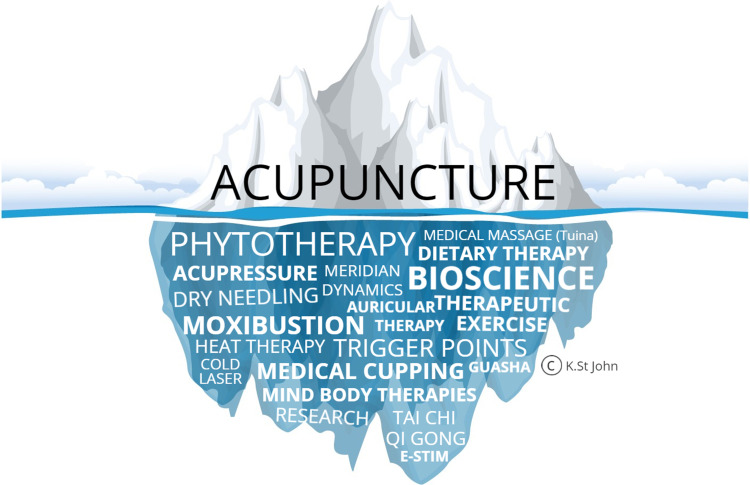
New Research on the State of 21st Century Acupuncture in the United States
Late last year, an overview of the use of acupuncture in the United States with this title was published in the prestigious Journal of Pain Research. This article covers, “the scientific basis for acupuncture, the training and licensure of acupuncturists, and the ways in which acupuncture is and might be incorporated into conventional medical settings” [1]. It was developed because, “while clinical use and acceptance of acupuncture continues to grow, there is to date no definitive composite document explaining the utility of acupuncture in various healthcare settings, the current understanding of how acupuncture works, and the training, professional regulation, and certification of acupuncture practitioners” [1]. The straightforward language of this text make it an ideal resource for people outside this field of study seeking to learn more about acupuncture. The authors also created the following video abstract to introduce the paper:
Takeaways from this important work I want to highlight include:
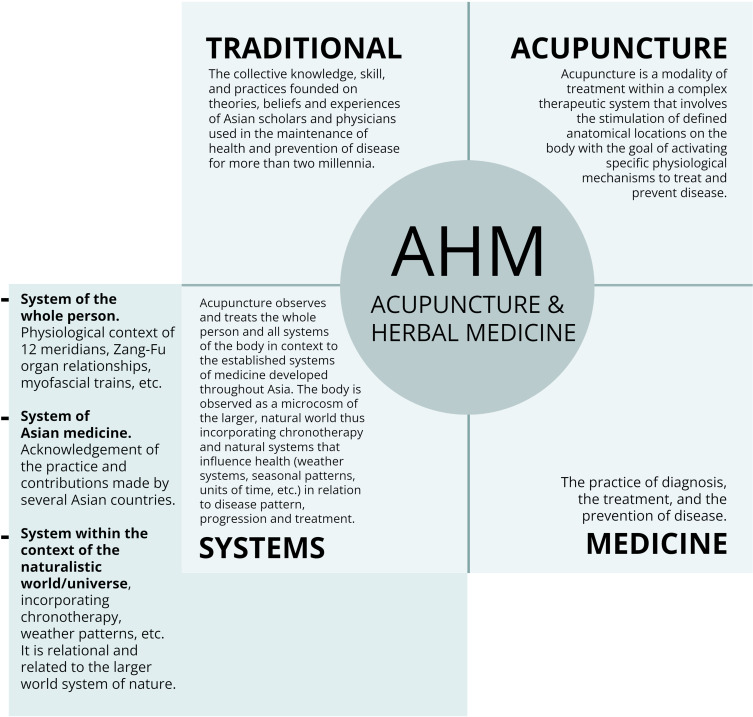
- Acupuncture & Herbal Medicine is, “systemically based and whole-person focused and consists of therapeutic recommendations targeting medical, behavioral, emotional, and dietary domains” [1]
The image the authors use to demonstrate this is as follows:
- “Dry needling” to treat myofascial trigger points (MTrps) is one form of acupuncture. MTrps are a type of painful point referred to as ‘ashi’ points in some texts and conversations about acupuncture
- In addition to the effects of acupuncture on the muscles, connective tissue, and brain I discussed in previous blog posts, recent research confirms that acupuncture instigates change in “gene transcription and translation” [2]
- There is currently ongoing research funded by the National Institute of Health that will continue to further our understanding of acupuncture, namely Topological Atlas and Repository for Acupoint research (TARA) project which “brings together AHM theory and practice with modern biomedical information, anatomy, and physiology into a searchable database” [3]
- While, in the United States, acupuncture has long been understood to be effective for pain conditions (particularly chrinic pain), digestive complaints, insomnia, etc, the researchers cite that 89% of National Cancer Institute-designated comprehensive cancer centers recommend the use of acupuncture for symptom management in oncology [1]
- In addition to point placement, the needling technique, including depth, accounts for differences in therapeutic benefits. This highlights another area where a particular practitioner’s technique can yield different and long-lasting effects
- From the mid 1990s until about 2015, there was an exponential growth rate in the number of acupuncture research studies published [4] (significantly higher than the growth rate in other areas of research). As this trend continues, it will validate more and more of clinical observations using Traditional East Asian Medicine
Works Cited:
[1] Smith CL, Reddy B, Wolf CM, et al. The State of 21st Century Acupuncture in the United States. J Pain Res. 2024;17:3329-3354. Published 2024 Oct 10. doi:10.2147/JPR.S469491
[2] Benrick A, Pillon NJ, Nilsson E, et al. Electroacupuncture Mimics Exercise-Induced Changes in Skeletal Muscle Gene Expression in Women With Polycystic Ovary Syndrome. J Clin Endocrinol Metab. 2020;105(6):2027-2041. doi:10.1210/clinem/dgaa165
[3] Napadow V, Harris RE, Helmer KG. Birth of the topological atlas and repository for acupoint research. J Integr Complement Med. 2023;29(12):769–773. doi: 10.1089/jicm.2023.0592
[4] Ma Y, Dong M, Zhou K, Mita C, Liu J, Wayne PM. Publication Trends in Acupuncture Research: A 20-Year Bibliometric Analysis Based on PubMed. PLoS One. 2016;11(12):e0168123. Published 2016 Dec 14. doi:10.1371/journal.pone.0168123